
Meet Asif
I'm an engineer. I work at the edge of what radio can do, and then I build the institutions the work needs. It began with 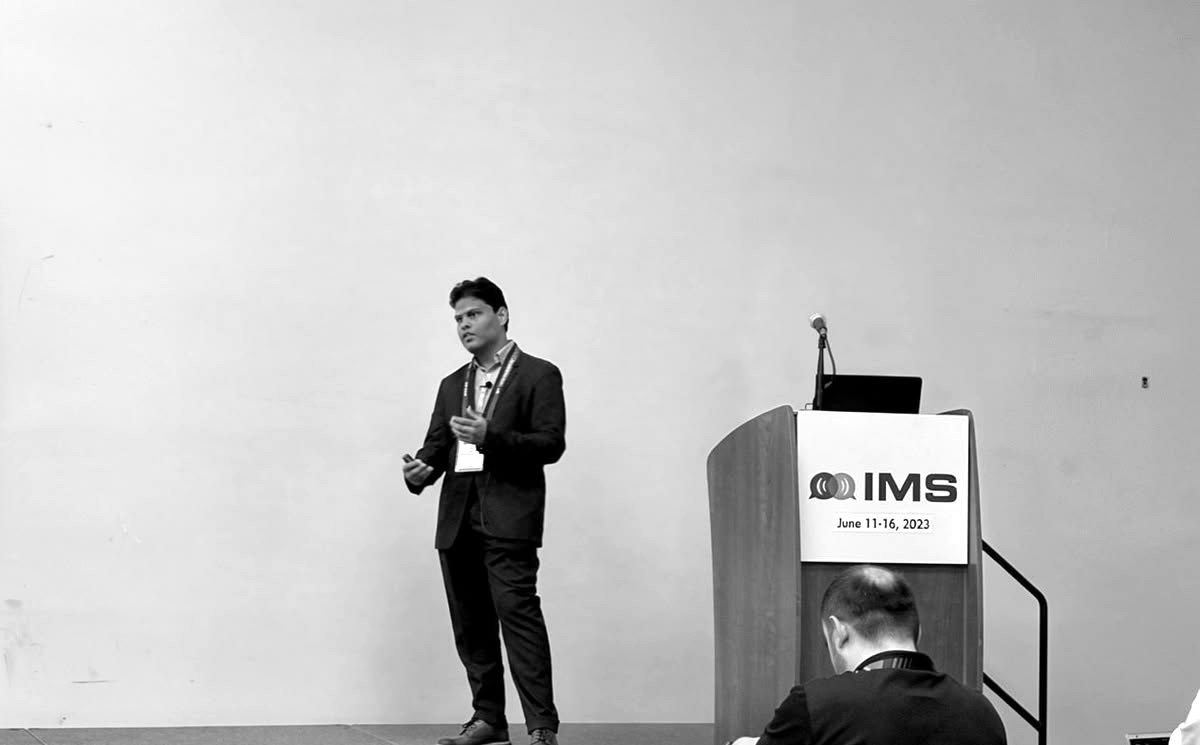 millimeter-wave hardware that became two US patents and a Gold Medal at the International Exhibition of Inventions in Geneva. It kept going because of one question,
 how fast can a technology actually improve, which led to the scaling law now known as Moore's Law for RF. Along the way I founded
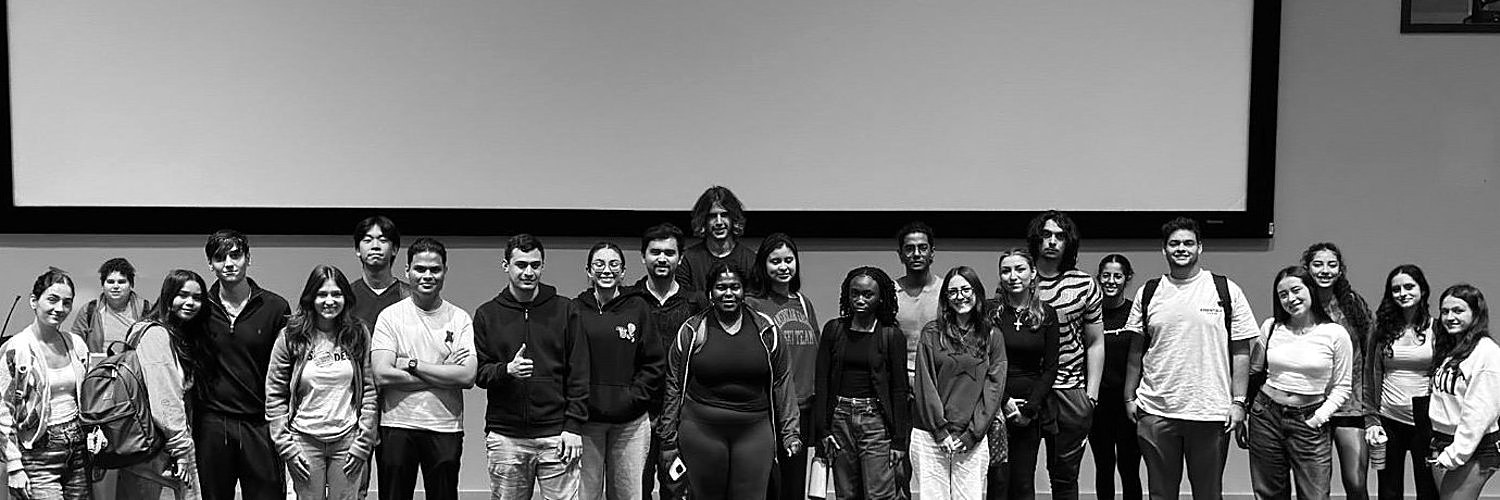 a research society and a journal, and wrote a book about where all of it is going.



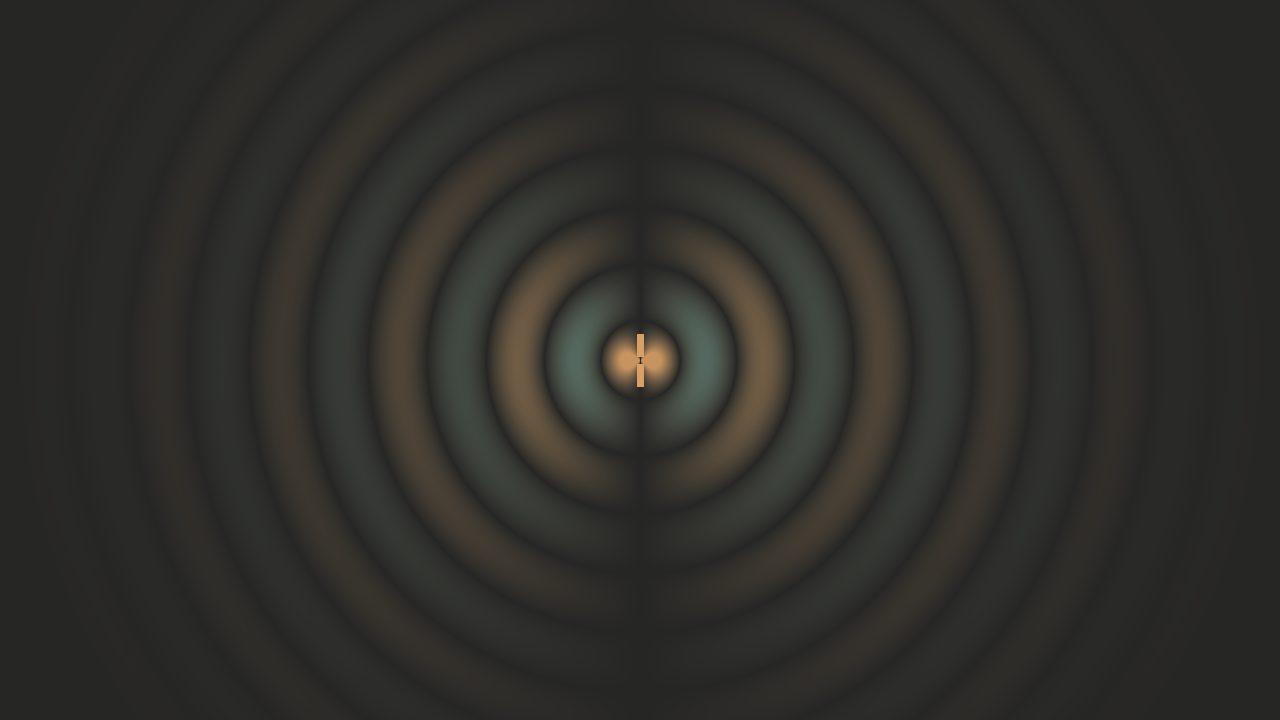
A dipole antenna radiating, drawn from its field equations. The oldest antenna there is, and still the first thing every array is measured against.
The bench
Where a promise meets a machine shop
Every engineer remembers the first part that came back from the shop and did not do what the simulation said it would. Mine was a millimeter-wave transition, a few millimeters of machined metal that had looked perfect on a screen for a year. It did not look perfect on the network analyzer. Closing that gap, a few microns at a time, produced a design method that replaces trial and error with equations, two US patents, and a Gold Medal at the International Exhibition of Inventions Geneva, chosen from more than a thousand inventions from over forty countries. The work has since been presented at five IEEE symposia across the United States.
Read about the hardwareThe people
Nobody shows you the first step, so I built the places that do
Most students never write a paper. Not because they have nothing to say, but because nobody walks them from a question to a result and from a result to something a stranger can read. I founded the Engineering Research Society to do that walk with people. It grew past two hundred members and ran the university’s first interdisciplinary hackathon. Then I founded the Engineering Review, the university’s first undergraduate engineering journal, so the walk had somewhere to end. Before either there was FinxNOW, an education initiative that reached more than forty nonprofit partners on five continents and ran competitions for students in four countries, before I closed it on purpose. It taught me the line I still use when a team gets ambitious: chaos does not scale.
The things I startedThe record speed of RF transistors, 1985 to 2025, drawing itself from the paper's data.
The question
How fast can a technology actually improve?
The question followed me from the bench to the whiteboard. Digital chips had a compass for sixty years. Radio never did, so every new band felt like starting over. Four decades of published records held a line nobody had drawn: RF transistors improve about 1.6 times per decade, in steps, with long plateaus where the real work happens. The result, published in IEEE Access and IEEE Microwave Magazine, is now called Moore’s Law for RF. The same way of thinking runs through everything I write, from 6G hardware to what will actually stop AI from scaling.
Read the essay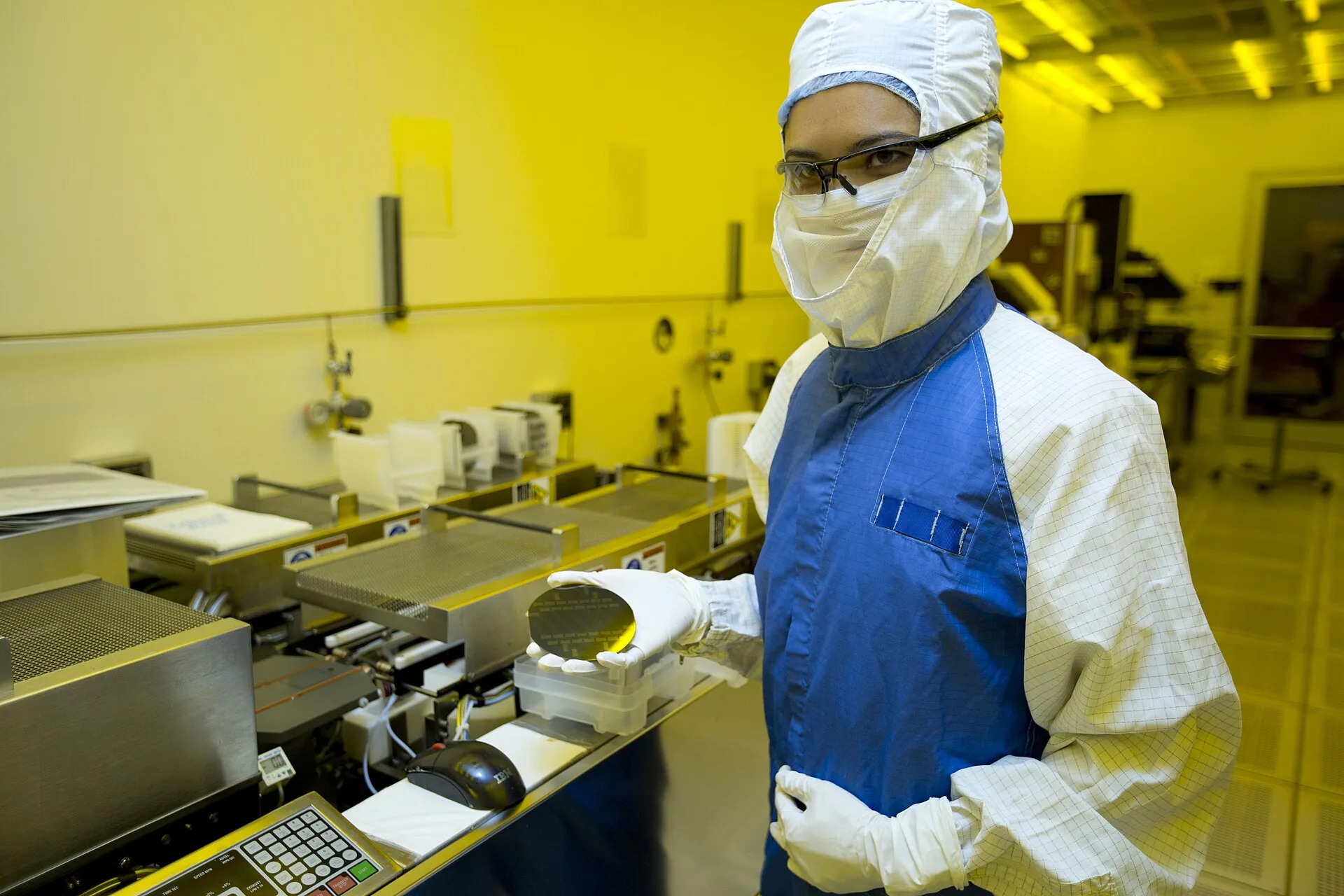
What comes next
Hardware, chips and AI, seen as one system
Hardware, chips and AI are run as three industries with three vocabularies, and the most expensive mistakes of the next decade will be made in the gaps between them: a chip nobody can package, a model nobody can power, a radio nobody can afford. That is where my work lives now. It carries what the bench taught me about the distance between a simulation and a working part, and what four decades of scaling data teach about patience. The essays here are the working notes.
Read the essaysGet in touch