How AI Scales, and What Stops It First
Break training compute into its three mechanisms and the first ceiling is the grid, not the chips.
The compute used to train the largest AI models has grown by a factor of several every year for more than a decade. Nothing in the history of technology has scaled that fast for that long, so the obvious question is how long it can continue, and the usual answer reaches for Moore’s Law, either to say that AI rides on it or that AI has escaped it. Neither is right, and the reason matters for anyone trying to plan around this technology, whether they are buying chips, building a data centre, or writing policy.
Moore’s Law describes one mechanism: transistor density. Training compute is the product of several mechanisms, each with its own physics and its own ceiling. If you want to know what stops the growth, you have to take the product apart.
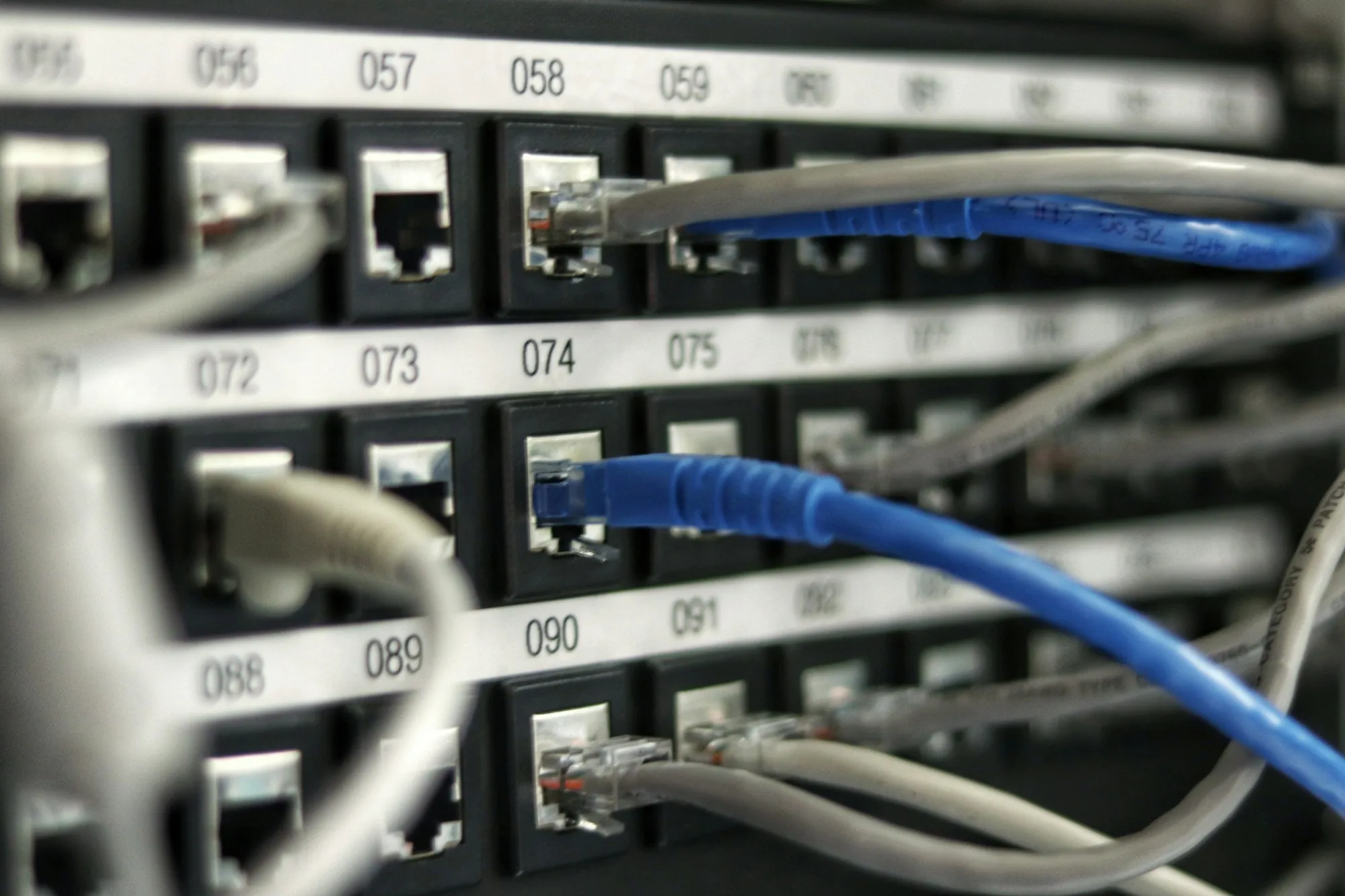
The compute available for a frontier training run in a given year is the product of three factors. The first is hardware performance: how much useful computation each accelerator delivers. The second is deployed infrastructure: how many accelerators exist and are wired together for one run. The third is what we call the efficiency absorption factor: how much of each algorithmic improvement is reinvested in larger runs rather than taken as savings.
The point is that each factor is governed by a distinct, independently measurable process, and each can be tracked from public data.
Tracking them is less exotic than it sounds. Hardware performance is published on every accelerator’s specification sheet and confirmed by independent benchmarks within weeks of release. Deployed infrastructure leaves a paper trail that has nothing to do with computing: utility interconnection requests, building permits, transformer orders, the quarterly capital expenditure lines of a handful of companies. Algorithmic efficiency is the hardest to see directly, but it can be inferred from how much compute it takes, year over year, to reach a fixed level of performance on a fixed benchmark. Anyone with patience and a spreadsheet can maintain all three series, and the exercise is worth doing because the three curves have started to diverge.
They are not independent in practice. They form a chain. Better chips make it worth deploying more of them. More deployed hardware makes larger models possible. Larger models reveal algorithmic efficiencies, and the industry has chosen, every single time so far, to spend those efficiencies on scale instead of savings. Growth compounds along that chain. So does fragility. Squeeze any link and the whole chain slows.
So the question that matters is which link binds first, and the data do not give the answer most people expect.
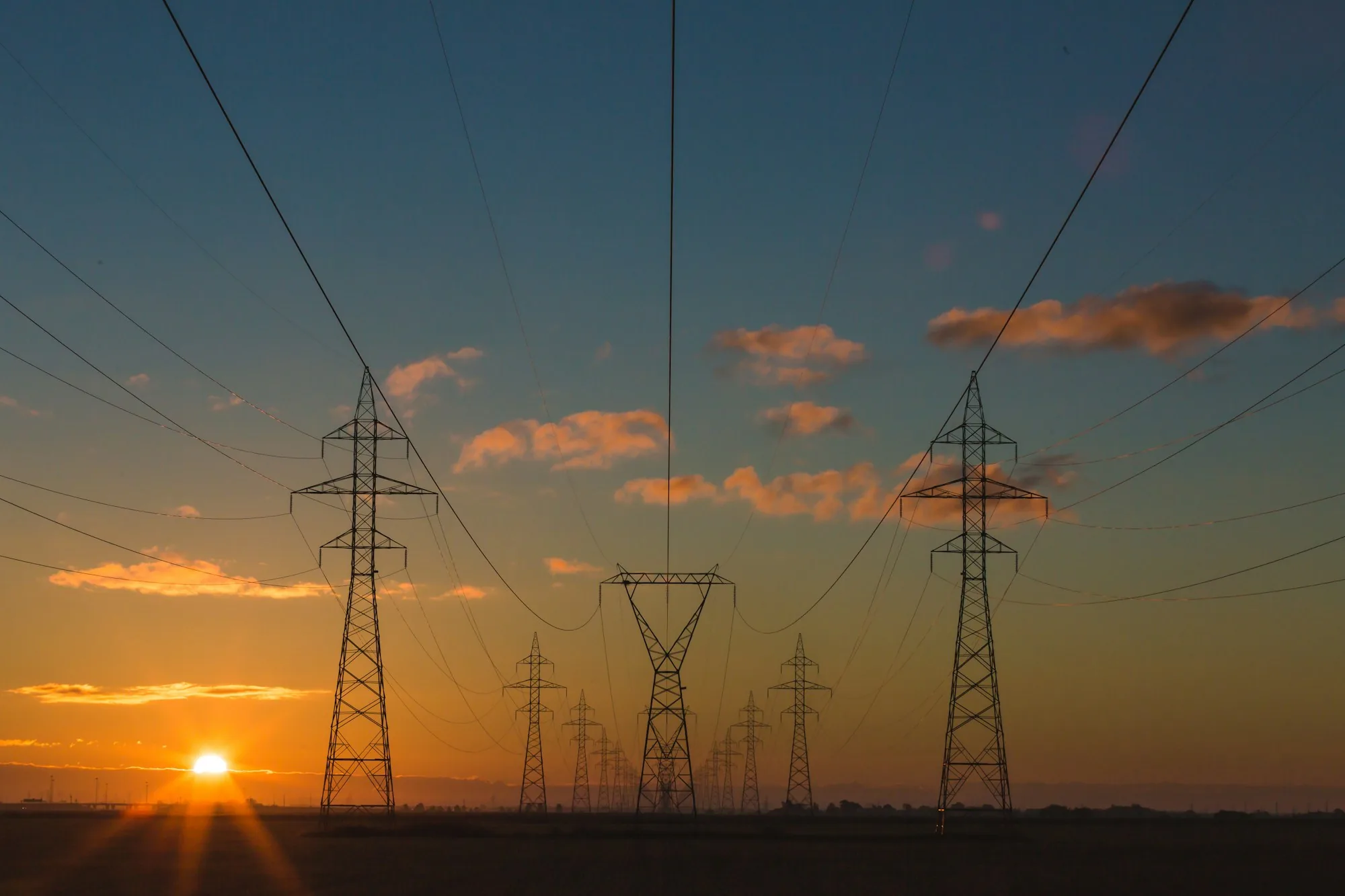
The first ceiling is electrical power. A frontier training cluster is already a facility measured in hundreds of megawatts, and the next generation is being planned in gigawatts. Building generation and transmission on that scale takes years, and it runs into permitting, interconnection queues and local politics that no amount of capital fully accelerates. Power capacity is the most consequential near-term constraint on frontier AI. It binds before the chips run out.
The second ceiling is energy per run. Even with grid capacity found, extending the current trajectory implies single training runs that consume energy comparable to the annual output of a large power plant. At that point a training run stops being an IT expenditure and becomes an energy project, with the economics and the public scrutiny that go with one.
The third ceiling, furthest out, is the physics of the hardware itself. This is where the story reconnects with RF and semiconductor scaling. The same transport limits, thermal densities and interconnect losses that bend the RF frequency curve will eventually bend the accelerator curve too. That limit is real. On current trends it is simply not the first one we hit.
The decomposition carries one uncomfortable implication for policy. Most of the public argument about governing AI capability has been about semiconductors: export controls, fab subsidies, who may buy which accelerator. Those levers act on the hardware factor. The factor that binds first is deployed infrastructure, and deployed infrastructure is limited by power.
Over the coming decade, energy policy is a more consequential lever on frontier AI than semiconductor export controls. Where plants get built, how quickly grids can connect large loads, and whether data centres may sit next to generation will do more to set the pace of AI than any decision about chips. That is not a case for or against any particular policy. It is an observation about where the constraint lives, and a suggestion that the argument should move there.
For companies the same decomposition is a planning tool. A firm that tracks only accelerator roadmaps is watching the factor that binds last. The questions that decide whether a frontier run happens on schedule are about interconnection agreements, substation lead times, cooling water and the politics of a county that has just been asked to host a gigawatt load. The firms that have moved fastest in the past two years are the ones that treated power as a first-class engineering input, signing generation contracts and siting decisions years before the chips they would eventually power existed. That is what it looks like to read the product correctly: identify the slowest factor and start there.
The efficiency factor deserves the same scrutiny, because it is where the most optimistic forecasts hide. Algorithmic progress has been real and large, and every gain so far has been spent on scale rather than banked. That is a choice, not a law. If the returns to scale flatten, or if the cost of the next power plant becomes politically unbearable, the industry could switch to taking efficiency as savings, and the compute curve would bend without any chip or grid having failed. Anyone forecasting frontier compute should say which of these behaviours they are assuming, because the two futures look nothing alike.
None of this is an argument that AI progress stops. Progress in capability has never been the same thing as progress in compute, and the historical record of computing suggests that when one lever jams, effort flows to the others. Smaller models trained for longer, better data, inference-time methods, specialised hardware that trades generality for efficiency: each is a way of buying capability without buying a power plant. What the decomposition predicts is not an end to progress but a change in its shape, from a straight line on a log chart to something more like the RF staircase, with plateaus where the industry digests a constraint and jumps when it finds a way around one.
People sometimes ask why this analysis came from RF engineers rather than a computer-science department. RF engineers have spent a century watching a technology scale against hard physical limits, and we have learned to distrust smooth curves. The frequency-scaling framework we built for RF transistors showed that progress arrives in steps, that plateaus are where the real work happens, and that the useful frontier lags the laboratory frontier because of packaging and power.
AI is now learning the same lessons. The models are the laboratory frontier. The grid is the package. Understanding how technologies scale is a discipline of its own, and its methods travel.