Building a Network Now Costs Less Than Buying One
Community fibre and low Earth orbit satellites are the same story.
Two stories about rural connectivity have run in parallel this year, and they are almost always told separately. One is about towns and cooperatives building their own broadband networks and competing with the incumbents. The other is about low Earth orbit satellites reaching places fibre never will. They have the same cause, and it deserves a name.
For most of the history of telecommunications the cost of building a network was so high that only a very large company could do it, and that company then set the price of service for everyone downstream. Both halves of that sentence have changed. The electronics that light a fibre network, the radios that deliver fixed wireless, and now the satellites and ground terminals that bypass terrestrial networks entirely have all become cheaper, and they have become cheaper faster than the monthly bill for service has. When the cost of building falls faster than the cost of buying, the people who used to be customers start to look like builders.
Take the community networks first. A locally owned network has no technology advantage over an incumbent. It uses the same fibre, the same optics, the same fixed-wireless gear. Its advantage is structural. The residents who own the network are the people who pay for it, so there is no reason to hold price above cost, and there is a very short line of accountability when service fails. Price and accountability follow ownership.
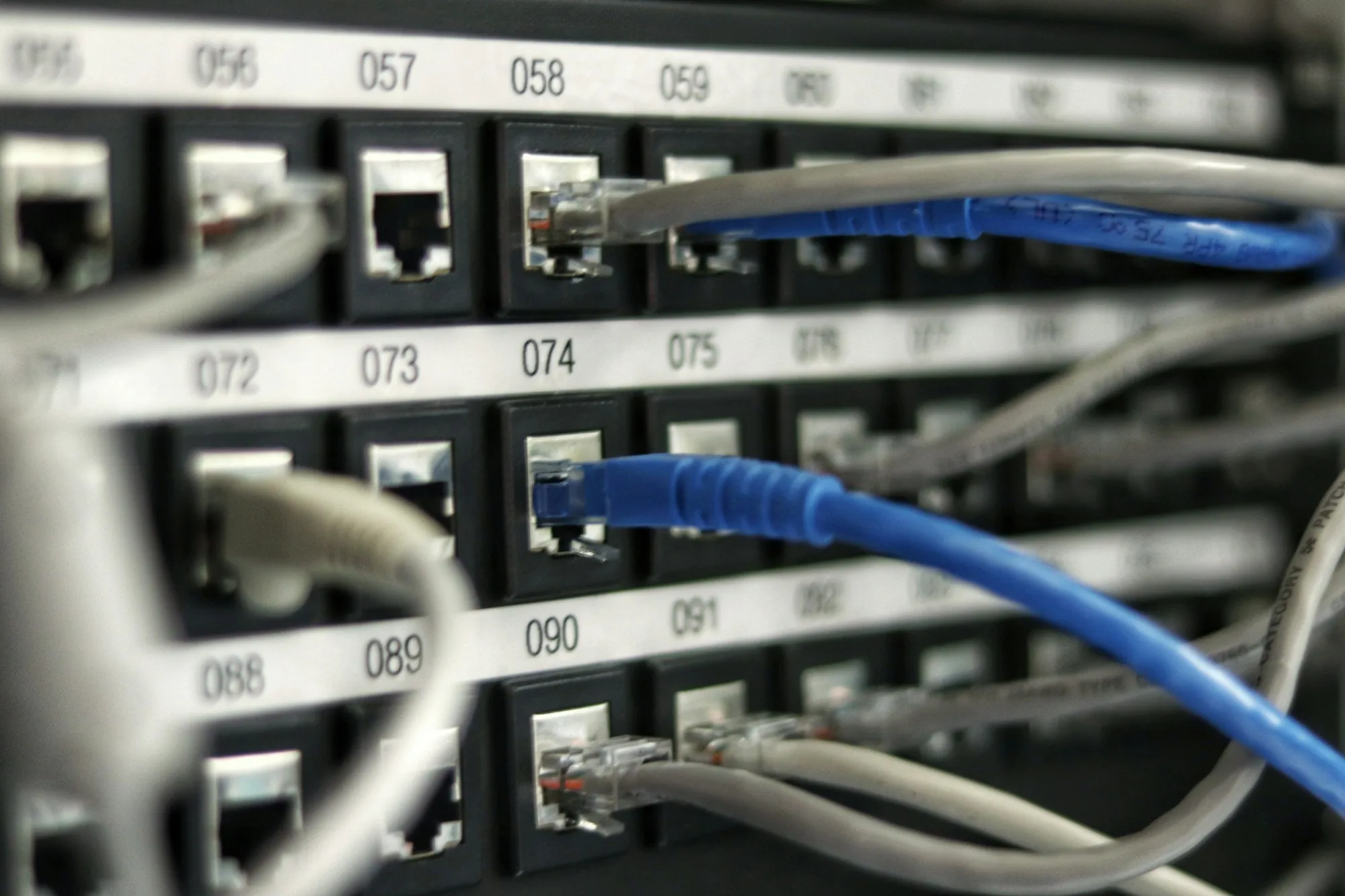
Modern fibre electronics make that practical at a scale that would have been absurd twenty years ago. A community of a few thousand homes can now run a network that once needed a regional carrier’s engineering department. Fixed wireless covers the gaps where trenching does not pay, reaching the last houses on the last roads at a cost the community can carry.
The numbers behind that are worth pausing on, because they are the whole argument. A decade ago the optical line terminal that lights a passive optical network was a carrier-class purchase, sized and priced for a metropolitan exchange. The same function now ships as a one-rack-unit box, and the optics that plug into it have followed the price curve of every other high-volume semiconductor product. The customer terminal for fixed wireless has gone the same way. A flat panel that once carried a defence-contract price tag is now a plastic housing with a phased array on a single board, mounted by a homeowner with a drill. None of these components was made cheap for the benefit of small towns. They were made cheap because hyperscale data centres and mobile carriers bought them by the million, and the towns are riding the tail of somebody else’s volume.
That is also why the incumbent’s usual response, a sharp price cut wherever a municipal network appears, tells you what the previous price was made of. When a carrier can halve a bill the month a competitor arrives, the bill was never about cost. It was about the absence of an alternative. The communities that have built their own networks report the same pattern, and it is the most honest market signal in the sector.
Low Earth orbit satellites solve a different version of the same problem. A geostationary satellite sits about 36,000 kilometres up, and the round trip is long enough that a web page feels sluggish and a video call feels broken. LEO constellations orbit between roughly 500 and 1,200 kilometres. Latency drops by an order of magnitude, into the range where a remote medical consultation, a farm’s sensor network, or a day of remote work becomes ordinary rather than heroic.
The hardware behind that is an RF story. Phased-array terminals that track a satellite crossing the sky in minutes were military equipment a decade ago. They are consumer products now because the antennas, the beamforming chips and the packaging that holds them together rode the same cost curve as the rest of electronics. The satellites followed the same curve.
Pause on the terminal, because it is the part of the story that surprises people. A phased array is a grid of small antennas fed with carefully timed signals so that their combined beam can be pointed electronically, with no moving parts, at a satellite streaking across the sky at seven kilometres a second. Twenty years ago that capability lived on warships and reconnaissance aircraft, and a single array could cost more than the house it now sits on. Consumer volumes changed the arithmetic. The beamforming chips are made in commercial foundries, the antennas are printed on ordinary laminates, and the whole assembly is manufactured on the kind of line that produces televisions. The result is a terminal that costs a few hundred dollars and does what a million-dollar radar did. That is the RF industry’s own scaling story, and it is why a farmhouse in a valley with no fibre can now hold a video call.
None of this makes ownership free. Building a network is a project; operating one is a job that never ends. Fibre gets cut by backhoes, radios need firmware, customer service needs people who answer the phone. Communities that have done well have treated the network as a utility with a real operating budget, not as a one-time grant. Satellites have their own version of the same lesson: capacity per cell is finite, and a constellation that is superb for a scattered valley becomes ordinary when a whole town signs up at once. The economics are better than they have ever been. They are not magic.
There is a regulatory version of this story too. The universal service obligations that most countries still enforce were written for copper telephone lines, and they oblige carriers to provide a service that fewer people want each year while saying nothing about the broadband people actually use. A technology-neutral obligation, funded by the broadband economy itself rather than by a levy on a dying product, would let fibre, fixed wireless and satellite compete to serve each address on cost rather than on which technology the statute happened to name. The hardware has already become neutral. The rules have not caught up.
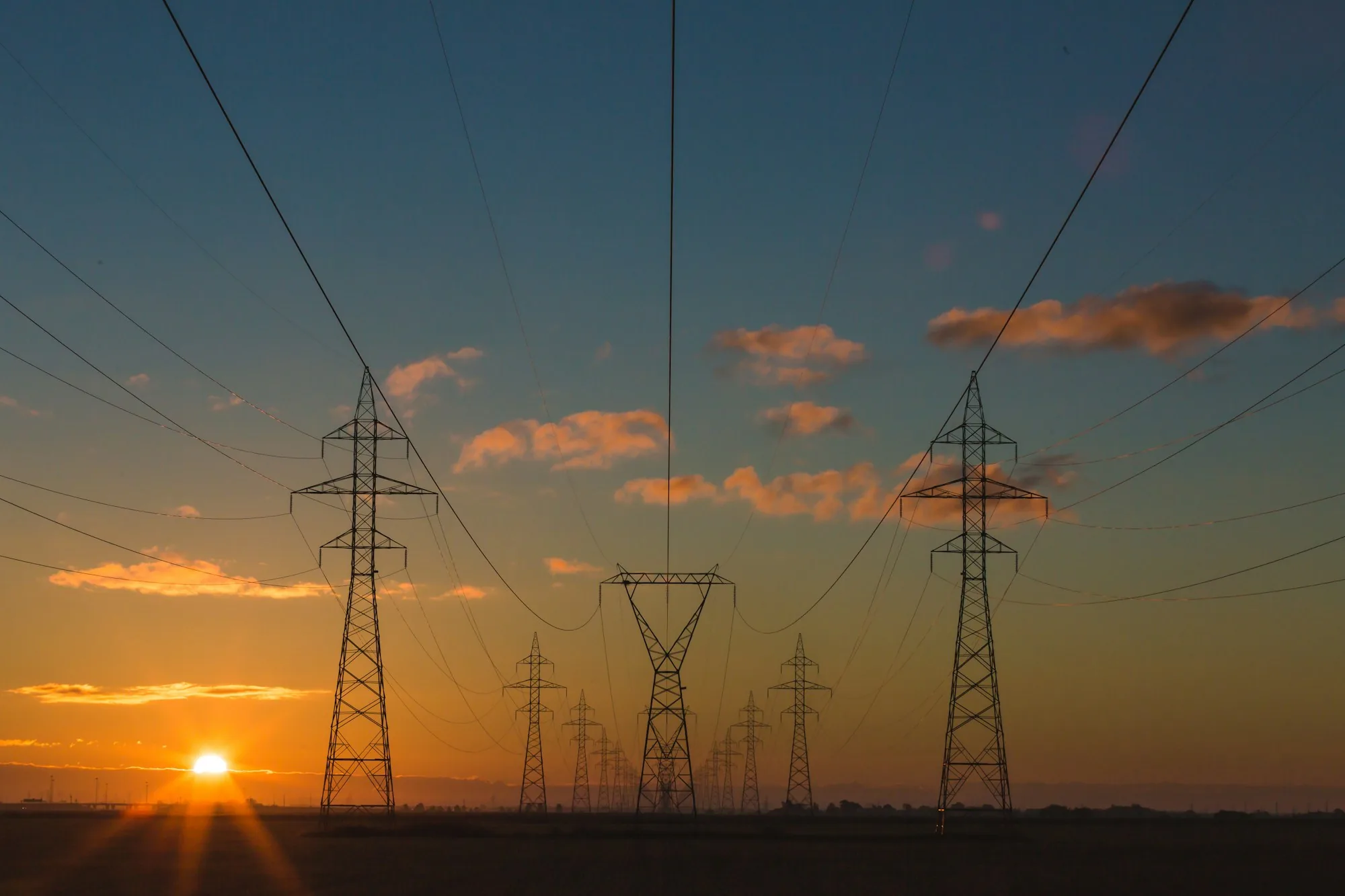
There is precedent for all of this, and it is older than the internet. When electricity reached American cities in the early twentieth century, the private utilities declined to string wire across the countryside, because the arithmetic of a customer every mile did not work. Rural communities formed cooperatives, borrowed against the future bills of their own members, and built the lines themselves. Within a generation the map of rural electrification was the map of those cooperatives, and many still operate. The parallel is not exact, but the mechanism is: when the cost of building falls far enough that the people who need the service can carry it, ownership moves to them, and the incumbents follow with prices they had previously called impossible.
For the engineers who design this equipment, the shift carries a design brief. Hardware that will be owned and operated by a small town or installed by a homeowner has to be built for people who will never read the manual. That means terminals that align themselves, radios that report their own faults in plain language, fibre electronics that survive a lightning storm and a curious raccoon, and interfaces that assume the operator is a volunteer. Those are not the priorities of equipment designed for a national carrier with a fleet of trucks, and the companies that understand the difference will sell into a market the carriers never saw.
Neither community broadband nor LEO satellites would exist as a mass-market option if the underlying RF and optical hardware had stayed expensive. Both are downstream of the same scaling that has run through wireless for decades. When people ask why infrastructure that once belonged to national carriers is suddenly available to a town council or a farmhouse, that is the answer. The hardware got cheap enough that ownership could move.
Where ownership moves, price and accountability move with it. That is the real disruption in rural connectivity, and it is a hardware story before it is a policy one.